
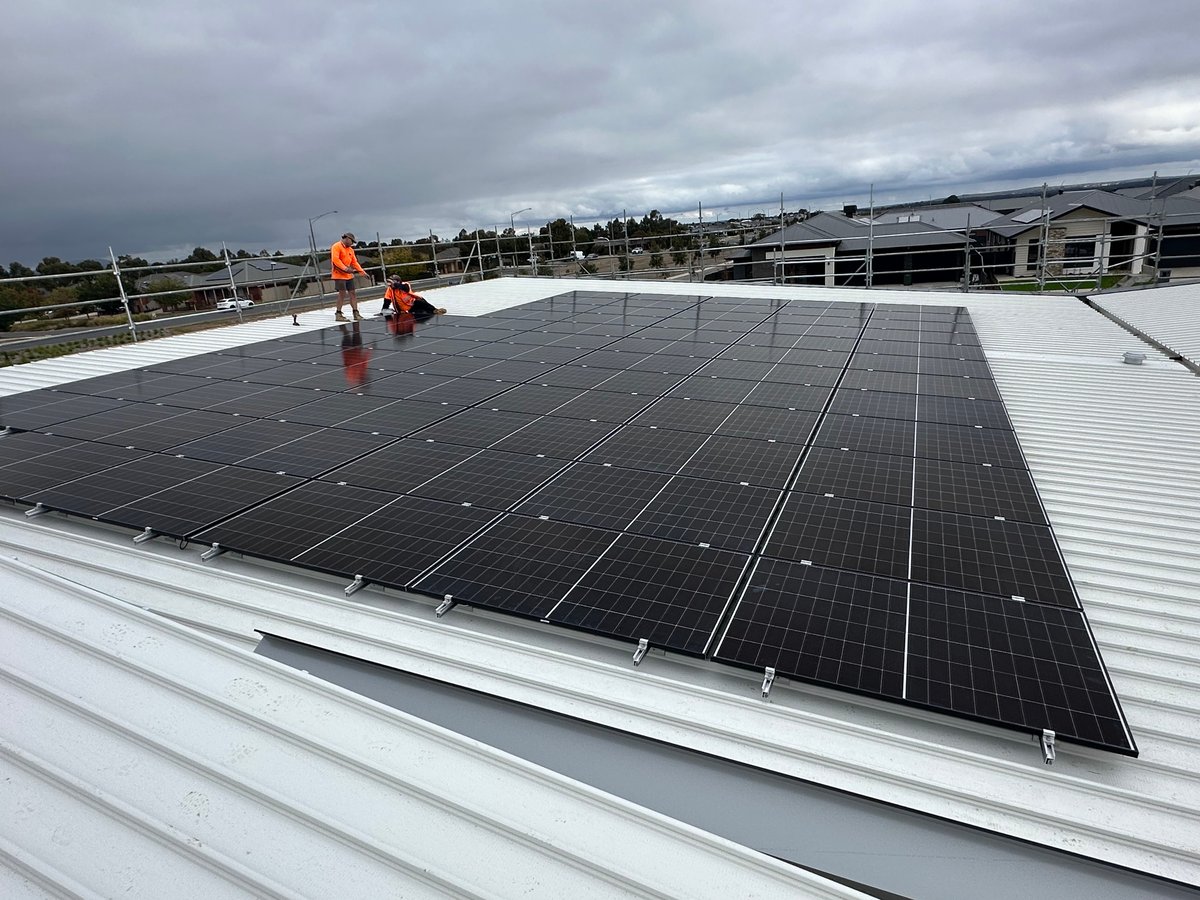
If you're considering solar panels, a battery storage system, or an energy-efficient hot water system under the Victorian government's Solar Homes Program — or you already have one — this update is worth a few minutes of your time.
The new Notice to Market takes effect on 1 July 2026. Two new mandatory requirements have been introduced: one focused on worker safety on your roof, and one protecting the smart devices inside your home.
What's changing
Two New Mandatory Requirements, Explained Simply
Stronger Apprentice Supervision
Any apprentice electrician on your job must be actively supervised by a licensed A-Grade electrician — in line with Energy Safe Victoria's official standards.
Cyber Security for Smart Devices
Solar panels, inverters, batteries, and hot water systems must now meet national cyber security rules. Non-compliant products get removed from the eligible list.
Requirement 1 of 2
Apprentice Supervision: Who's Actually Working on Your Roof?
Under the updated rules (in effect since 1 September 2025 and now reinforced in the Solar Homes Program), every apprentice electrician must be supervised in line with Energy Safe Victoria's Requirements for Effective Supervision of Apprentice Electricians. Critically, the level of supervision required depends on the apprentice's year of training — it is not a one-size-fits-all rule.
"This will help improve onsite safety while supporting structured, hands-on learning and long-term workforce capability across the sector."
— Solar Victoria, Notice to Market 2026–27
Supervision levels by apprentice year
There are three defined supervision levels — Direct, General, and Broad — and the required level changes as an apprentice gains experience and demonstrated competency:
| Year | Supervision Level | Ratio | What It Means in Practice |
|---|---|---|---|
| 1st Year | Direct | 1:1 | Supervisor must be within sight and hearing at all times. The apprentice cannot work independently on any electrical installation work. |
| 2nd Year | Direct → General | 1:1 to 1:3 | Direct supervision required for high-risk tasks such as isolations and fault-finding. May progress to general supervision for routine tasks as competency is demonstrated. |
| 3rd Year | General | 1:3 | Supervisor must remain on-site, providing instructions and performing regular checks, while the apprentice works with greater independence. |
| 4th Year | Broad | 1:5 | Supervisor does not need to be on-site at all times but must make face-to-face contact during the shift and remain readily contactable. A competent 4th-year apprentice can be on site alone for lower-risk, de-energized AC work. However, the supervisor must return to the site for all testing and energization. Working on or near DC cables (e.g., solar panel strings) is considered high-risk and always requires direct 1:1 supervision, regardless of year level. |
This is an important nuance: the new rules are not a blanket requirement for a licensed electrician to stand over every apprentice on every job. Supervision scales with experience — but high-risk tasks such as testing, energisation, fault-finding, and any work on or near DC cables always require direct 1:1 supervision regardless of year level. Fault-finding is not permitted before 3rd year.
This framework formalises what responsible employers already practised. For customers, it means greater accountability, clearer responsibility, and safer installations on your property.
Requirement 2 of 2
Cyber Security: Protecting the Devices in Your Home
Today's solar inverters, battery systems, and hot water units are "smart" devices — they connect to the internet, share data with manufacturers and energy retailers, and can be remotely monitored or adjusted. That connectivity creates real cyber security exposure.
From 1 July 2026, any product eligible under the Solar Homes Program must conform to national cyber security rules that came into force on 4 March 2026. These rules require manufacturers to:
- Eliminate default passwords that leave devices open to unauthorised access
- Strengthen how security vulnerabilities are reported and resolved
- Provide clear, accessible information about security updates and patches
Products that don't comply will be removed from Solar Victoria's eligible product lists — meaning they can no longer be used under the Solar Homes rebate program. Solar Victoria will monitor enforcement by the Department of Home Affairs and work with manufacturers to ensure compliance.
If you're about to sign a quote, it's a reasonable question to ask: "Are all the products you're supplying still on the eligible list after 1 July?"
Key dates
Key Dates to Know
National cyber security rules commenced for connectable consumer devices.
Current Notice to Market remains in effect. You can still install under existing rules.
New Notice to Market 2026–27 takes full effect. Both new requirements become mandatory.
For customers
What This Means for You — 4 Things to Know
Ask About Product Eligibility Before You Sign
Request written confirmation that all products in your quote remain on Solar Victoria's eligible list after 1 July 2026.
Know Who's On Your Roof
Ask whether a licensed A-Grade electrician will be on-site for your full installation. If there's an apprentice, confirm that a supervisor will be physically present.
Don't Let Urgency Override Due Diligence
If you're rushing to lock in a rebate before the financial year ends, don't let that pressure you into an installer who can't confirm compliance. These rules exist to protect you.
Existing Systems Are Not Affected
If your system was already installed under a previous Solar Homes period, these changes don't apply retroactively. They apply to new installations from 1 July 2026 onward.
Published June 2026 · xTechs Renewables
Questions About Your Installation?
We're happy to confirm product eligibility and walk you through what the new rules mean for your specific quote.
CEC Accredited · REC 36065 · In-house A-Grade electricians · No subcontracting · Melbourne & surrounds
Guide for Melbourne & Victoria homeowners considering solar, battery, or hot water under the Solar Homes Program. Rules and eligible product lists can change — confirm current requirements with your accredited installer. See our solar rebates hub for more.